Bouarfa, Morocco — Aleppo pine
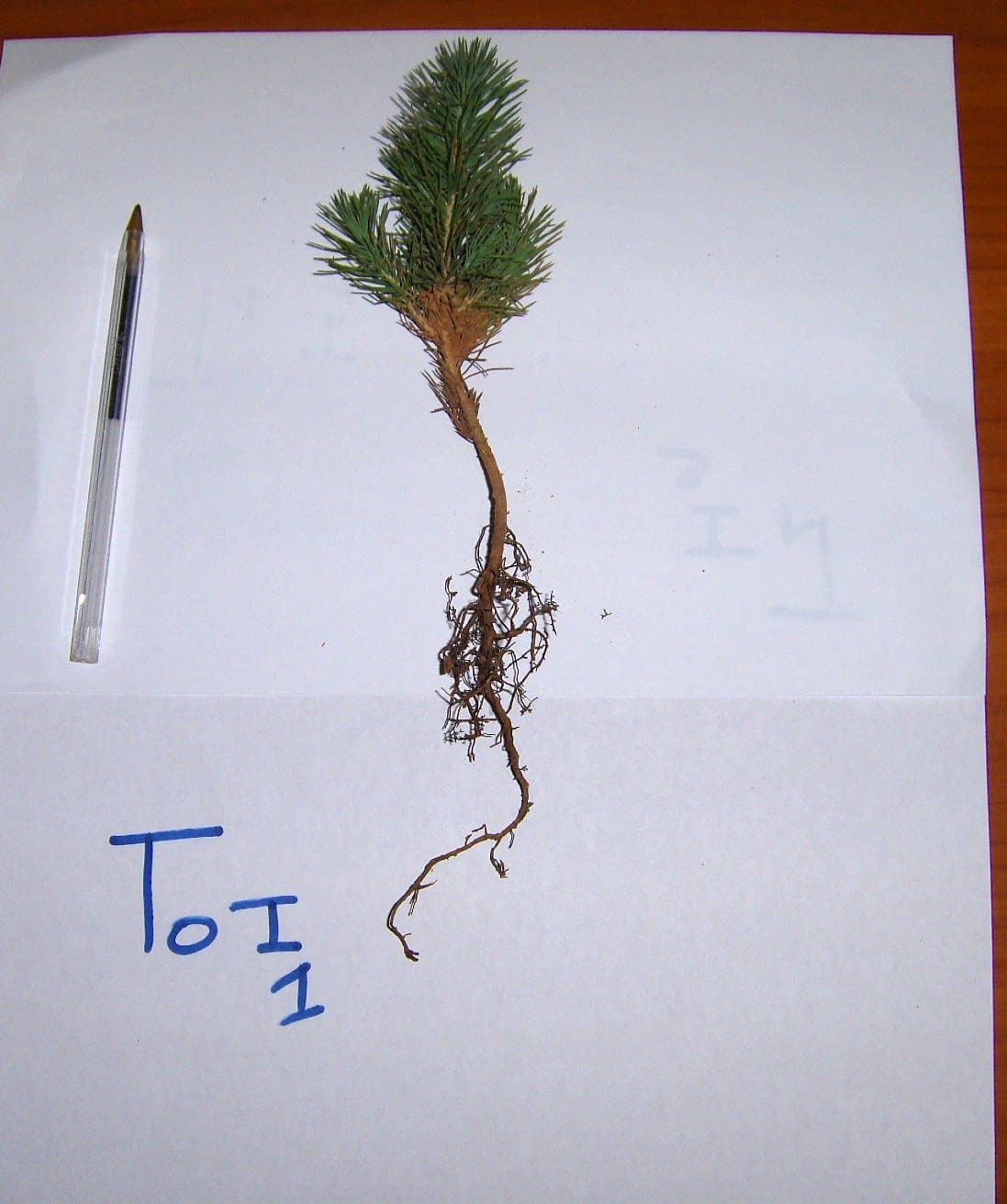
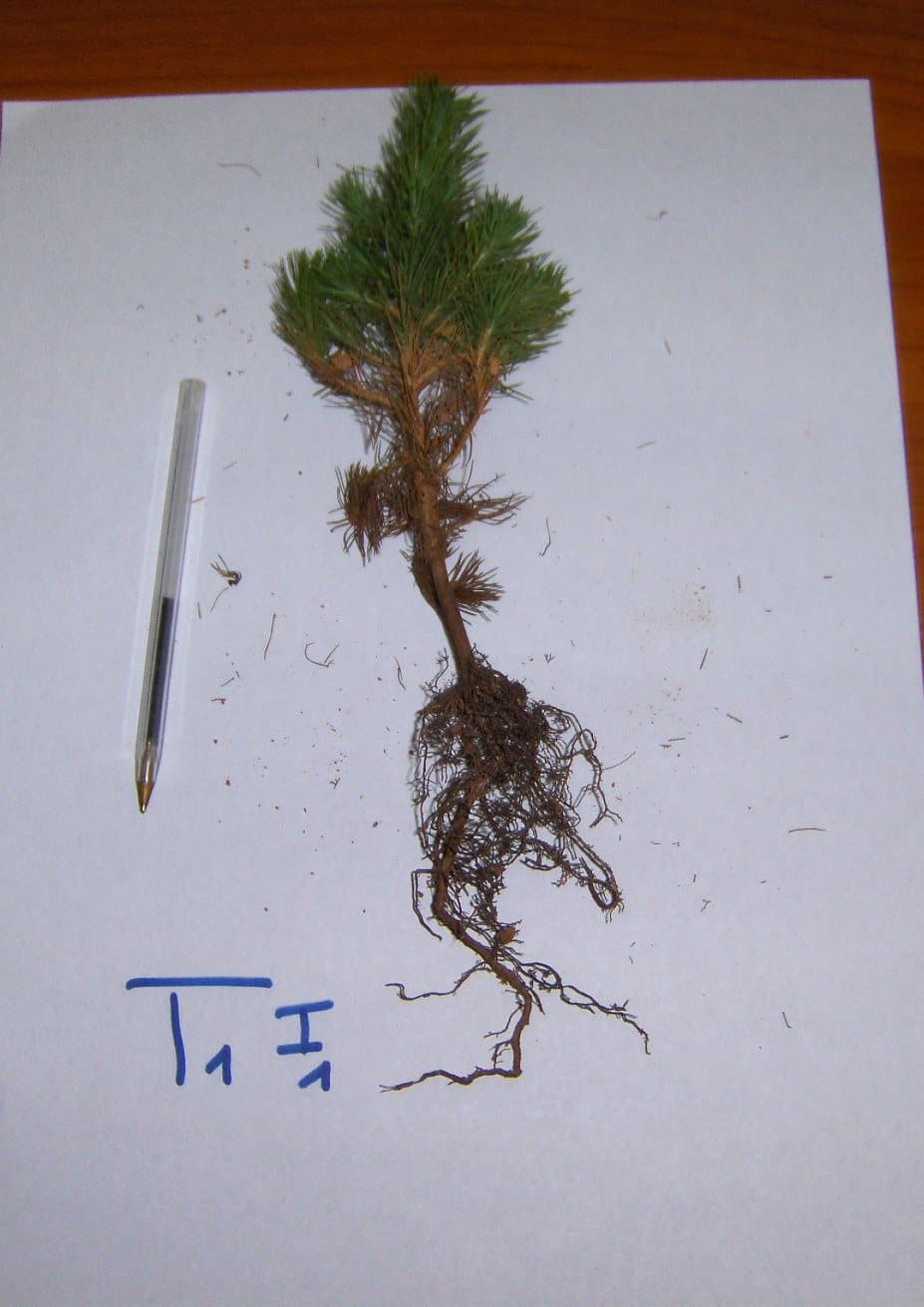
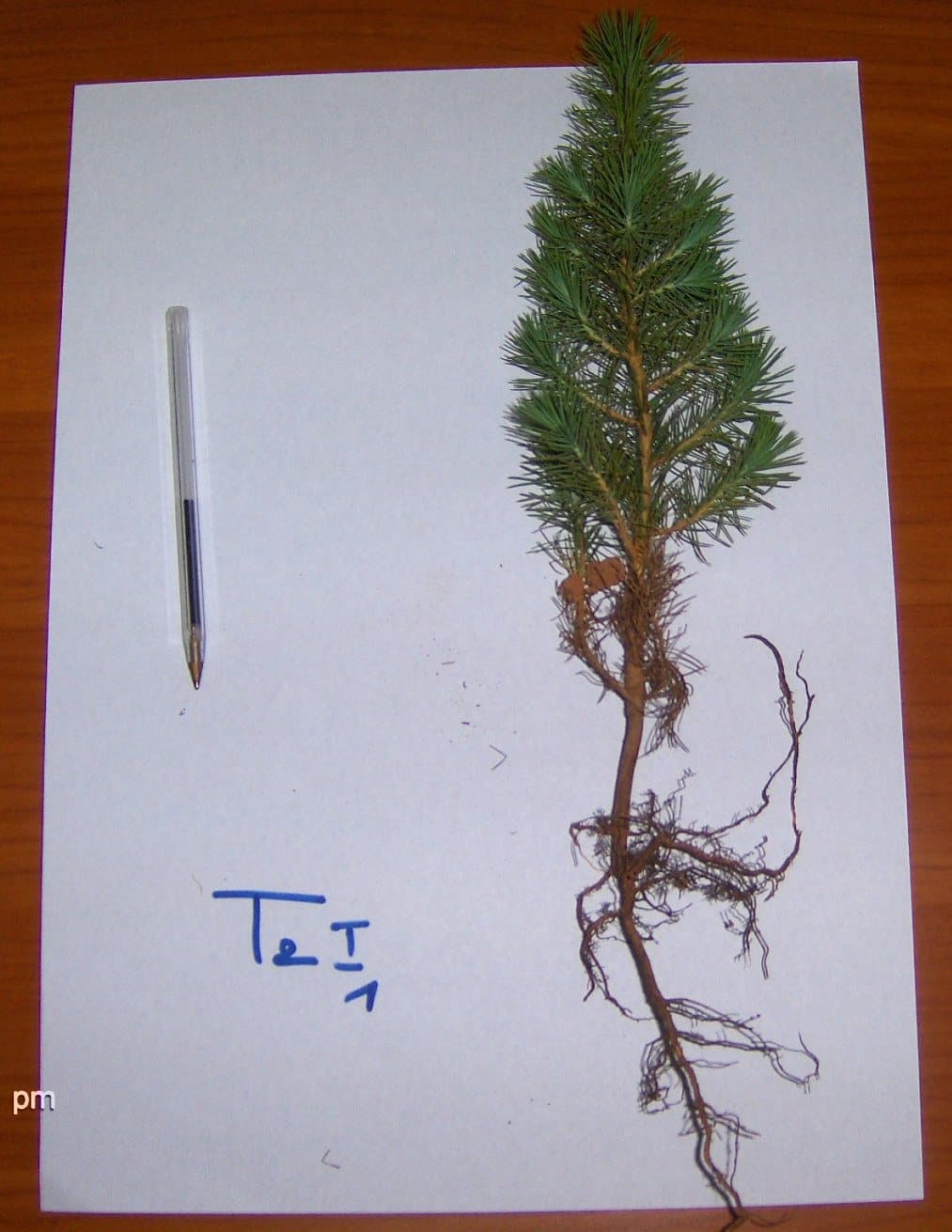
Nine weeks after planting, the roots told the whole story. Those running the trial judged the increment equal to two years' growth.
The Sahara is expanding in all directions at a rate of some 10,000 square kilometres a year. If desertification continues at the present rate, most of Morocco will have progressed to desert by 2050, leaving a narrow coastal strip in the lee of the Atlas Mountains.
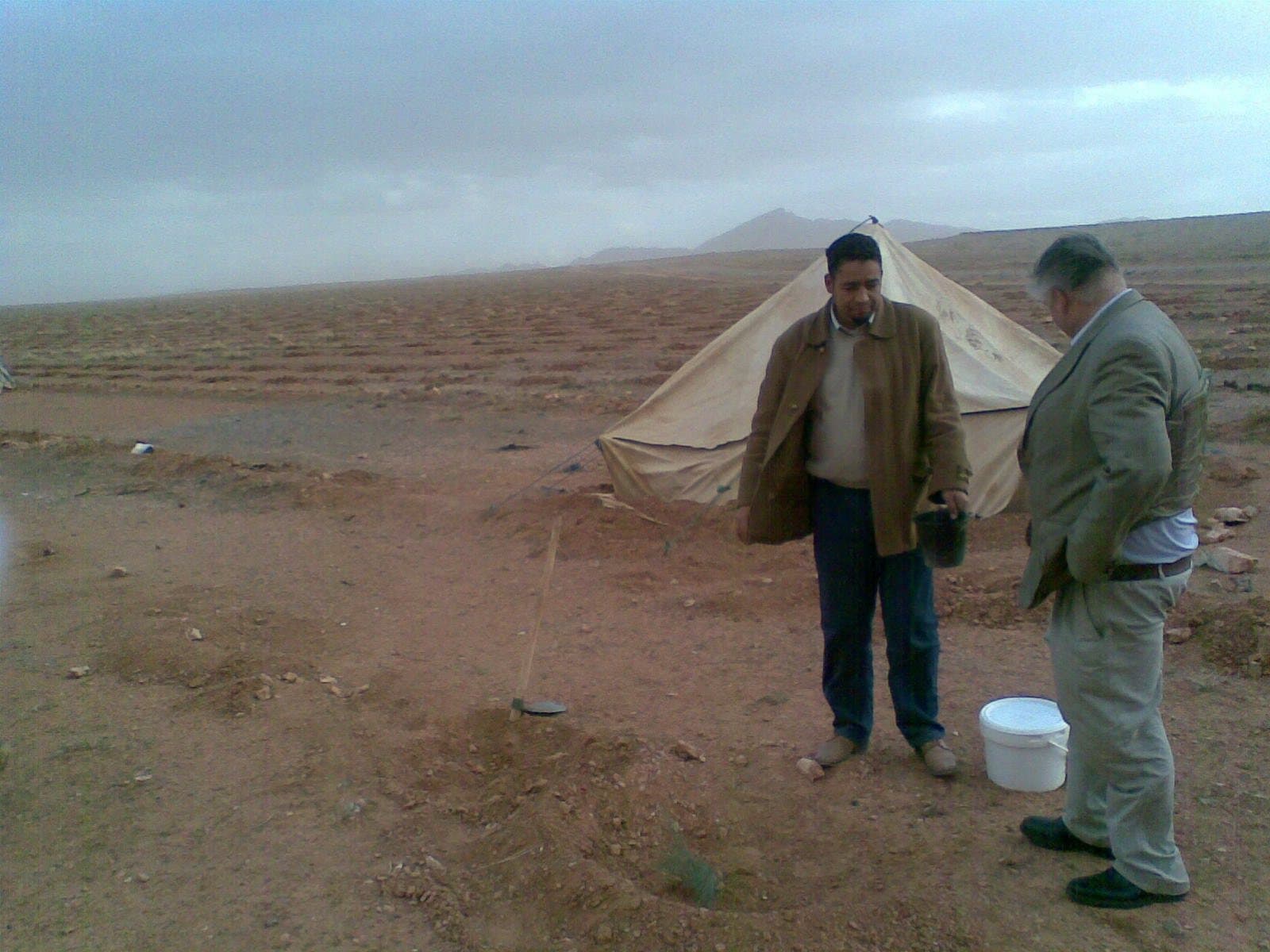
In 2009 the Moroccan government, with the United Nations Industrial Development Organisation, announced an ambitious tree-planting scheme. Four large areas in the east and south-east were earmarked for forestry, each in excess of a million hectares.
Why forestry, and why it is hard
The purpose was twofold. Forestry intercepts rainfall: where a soil is devoid of organic matter it is prone to mobility through convective wind and flash flooding, but by intercepting the gravitational energy of precipitation, rain can be allowed to drain in — which in turn promotes rooting and the accumulation of organic residue. Second, mature trees push a considerable quantity of warm humid air into the atmosphere through transpiration and respiration. Travelling upwards it meets the moisture-laden south-westerlies off the equatorial Atlantic; the result is aerial turbulence and precipitation. A million hectares of mature forest would be enough to make a significant difference to the local climate.
The obstacles were the shortage of irrigation water and the absence of organic matter — which acts both as a sponge for water and as a glue to stabilise the inorganic particles that form the substrate. With investment money inevitably short, any planting aid would have to be cheap and reliable.
Design
Zander Corporation was invited in December 2009 to supply products for a trial planting of Aleppo pine, Pinus halepensis. Three blocks were marked out across six experimental designs, 108 plants in all. Planting on 22 March 2010; first irrigation the same day; second on 18 May; data collected 24 May.
| Code | Treatment | Irrigation |
|---|---|---|
| T₀I₁ | Control — no Zander products | One episode, 15 L at planting |
| T₀I₂ | Control — no Zander products | Two episodes, at planting and two months later |
| T₁I₁ | 1 litre Zander Organic | One episode |
| T₁I₂ | 1 litre Zander Organic | Two episodes |
| T₂I₁ | Zander Organic + AridGrow mycorrhiza | One episode |
| T₂I₂ | Zander Organic + AridGrow mycorrhiza | Two episodes |
What came out of the ground
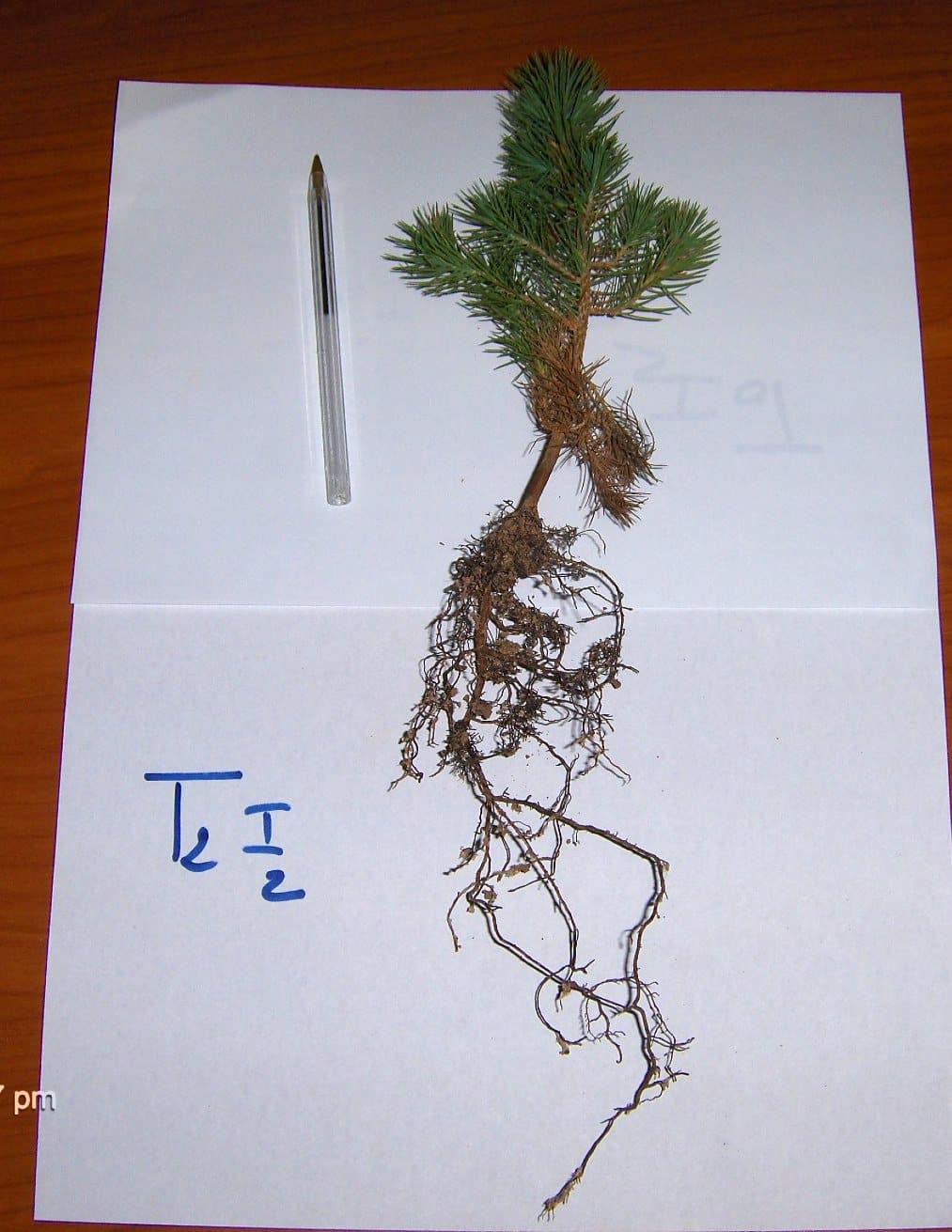
| Design | Root length | Height | Girth |
|---|---|---|---|
| T₀I₁ control | 19.0 cm | 15.55 cm | 3.35 cm |
| T₀I₂ control | 19.8 cm | 16.18 cm | 3.30 cm |
| T₁I₁ organic | 19.7 cm | 16.62 cm | 3.55 cm |
| T₁I₂ organic | 38.0 cm | 16.88 cm | 3.45 cm |
| T₂I₁ organic + myc. | 23.9 cm | 17.45 cm | 3.65 cm |
| T₂I₂ organic + myc. | 34.2 cm | 17.20 cm | 4.55 cm |
Discussion
The most remarkable feature of the trial was the sheer size of the difference between amended and unamended designs within the nine weeks between planting and observation. A positive correlation generally holds between all three measured parameters, suggesting that a better-formed root system carries increased height and girth with it.
Girth reflects the biomass the young trees actually acquire, and increased girth is associated with both the conditioner and the mycorrhiza — the latter encouraging the development of fibrous ancillary root, which increases nutrient supply. Mycorrhiza sits between root and soil and supplies the plant with soluble potassium, magnesium and phosphorus out of relatively insoluble sources.
Taking all factors into account, the optimal growth parameters were exhibited by plants treated with both Zander Organic and mycorrhiza. Those running the trial considered that the increments equated to two years' growth after only nine weeks.
Source — Morocco: A Trial to test Zander Products in the Establishment of Pinus halepensis on a Desert Soil in Mouloudah, Bouarfa
← All entries