What Zander actually is
An organic sediment laid down one millimetre a year, for fifteen thousand years, at the bottom of slow northern lakes.
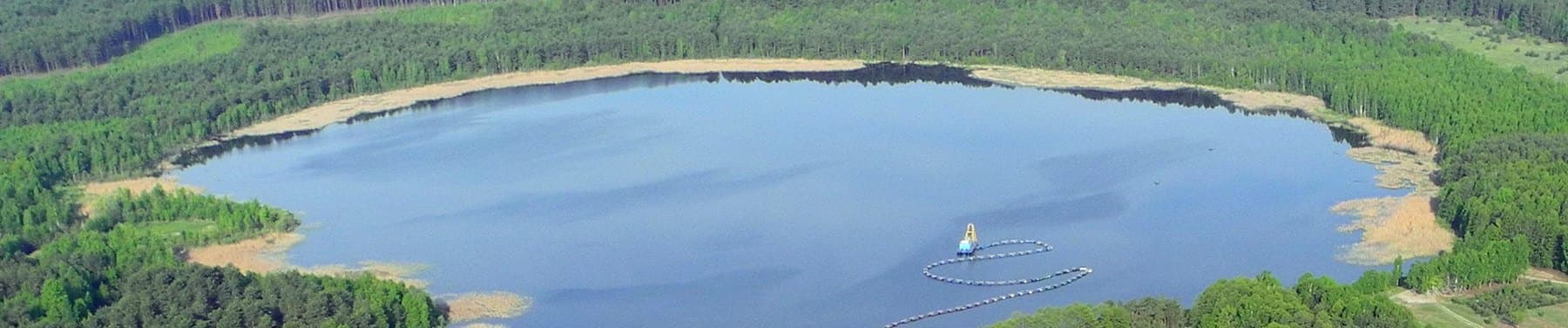
Zander is the name given to an organic deposit found chiefly in the freshwater lakes of Northern Europe. It is associated with shallow depressions in the flat glacial shield that encompasses Russia, the Baltic States, Ukraine and Poland.
The material derives from native lakeside vegetation — chiefly reeds — which has fallen as a continuous rain of organic matter into the lake. Because the ingress aquifers run slowly, dissolved oxygen is low, and the usual processes of respiration never take place. Instead the particles of digested vegetation form a jelly on the lake floor, and most of the beneficial substances held in the original vegetation — vitamins, organic acids, minerals — are preserved rather than burnt away.
That process began at the retreat of the glaciers some fifteen thousand years ago. The jelly has accumulated in microlaminations roughly one millimetre thick ever since. Some of it has been lost to water–air interaction over that time, but a great many lakes are now clogged with the stuff — so choked that only the water at the very surface is free of it.
From lake bed to pallet
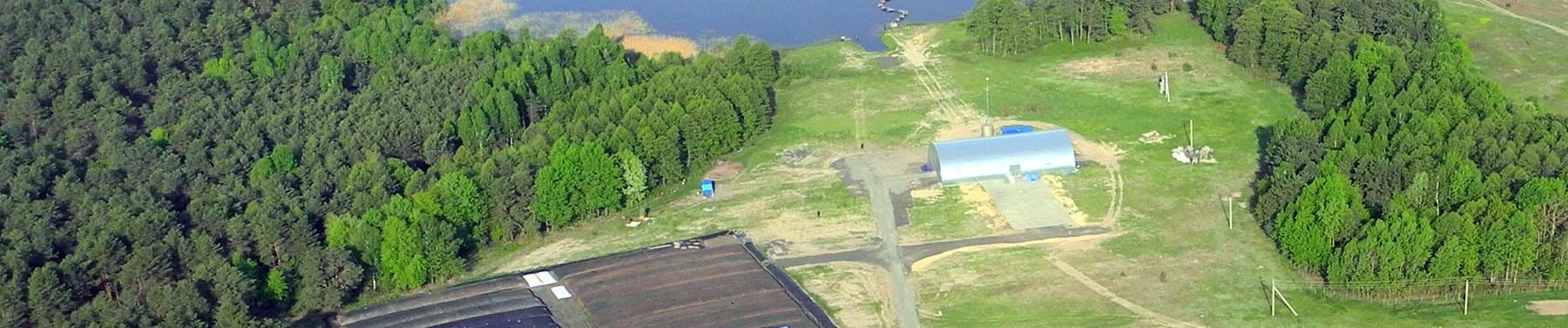
Once landed, the deposit is dewatered by the simplest possible means: it is left out in a normal Polish winter. Freezing drives the water out, taking the material down to about 66% moisture, and at that point it is invaded by beneficial micro-organisms. It is then blended with organic matter from an inert source and packed into one-cubic-metre bulk bags or twenty-litre polybags, and palleted.
Graded and packed for sale, the conditioner is designated Zander Organic. In the field it is usually referred to simply as .
It is not peat
Ready for use, Zander resembles wet peat — but that is where the similarity ends. Peat is composed of the compacted skeletons of moss or sedge plants in an acidic environment devoid of biota. Exposed to a higher pH its life is considerably shortened, and it may last only a single growing season.
Zander accumulates instead in low-oxygen lakes, arrives biologically alive, and goes on working. Where peat gives one season, Zander applied to a desert soil has gone on improving crops for up to nine years. And where the exploitation of peat bogs is now — rightly — being discouraged, taking Zander out of a choked lake improves it.
Source — Zander Corporation technical notes
← All entries